

Gout in the foot isn’t just a fancy term for a bad case of foot-in-mouth disease. It’s a painful condition that can turn even the simplest stroll into a dramatic scene worthy of a soap opera. Imagine your big toe suddenly deciding to throw a tantrum, swelling up like a balloon and leaving you questioning your life choices.
But what exactly is gout? It’s more than just an excuse to avoid wearing tight shoes. This condition arises from a buildup of uric acid in the blood, leading to those infamous flare-ups that can make anyone reconsider their love for rich foods and fine wines. Understanding gout can help one manage the pain and keep those toes happy, so let’s dive into the world of this quirky yet troublesome ailment.
What Is Gout In The Foot?
Gout in the foot is an inflammatory arthritis characterized by sudden and severe pain, redness, and swelling, particularly affecting the big toe. It stems from excess uric acid in the bloodstream, leading to the formation of sharp crystals in the joints. This condition can cause intense flare-ups, often occurring at night and frequently disrupting sleep.
Individuals with gout typically experience the initial flare followed by periods of remission. These attacks may recur, intensifying in severity if not managed properly. Common symptoms include localized pain, swelling, and tenderness, making even light touch uncomfortable.
Risk factors for developing gout encompass obesity, high blood pressure, and a diet rich in purines, which are found in certain foods like red meat and seafood. Alcohol consumption, especially beer, elevates uric acid levels, further increasing the likelihood of an episode. Genetics also play a crucial role; a family history of gout raises the chances of its occurrence.
Diagnosis often involves a physical examination and laboratory tests to measure uric acid levels. Medical professionals might recommend imaging tests to assess joint damage. Addressing lifestyle changes, including dietary adjustments and medications, significantly aids in management and prevention. Regular follow-ups with healthcare providers help monitor uric acid levels and adjust treatment plans as needed.
Understanding gout in the foot is essential for managing symptoms effectively, reducing flare-ups, and promoting overall foot health.
Symptoms Of Gout In The Foot
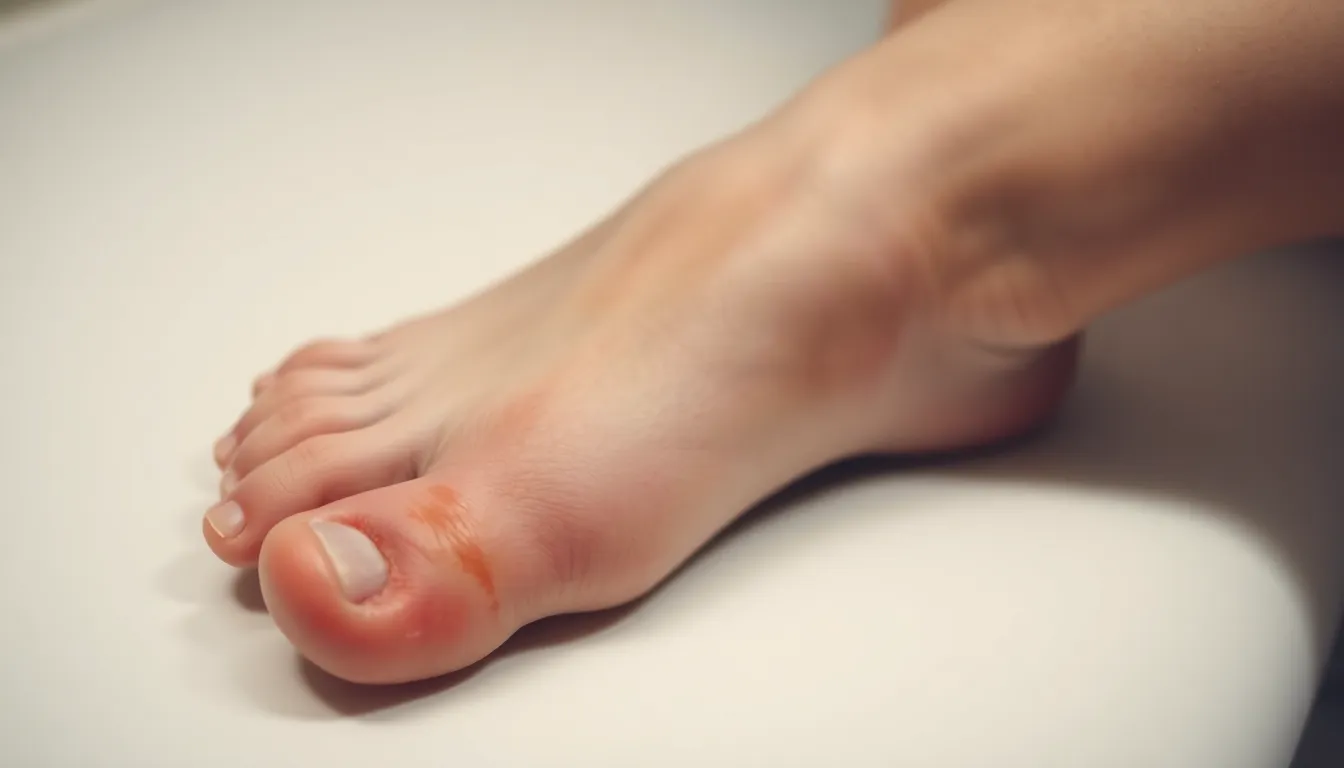

Gout in the foot presents with several distinct symptoms that indicate its presence.
Common Symptoms
Pain often begins abruptly, usually at night. The big toe often shows pronounced redness and swelling. Heat in the affected area may occur, contributing to discomfort. Tenderness when pressure is applied becomes apparent, making footwear intolerable. Individuals may experience limited range of motion in the affected joint. These symptoms typically herald a gout attack, often lasting for several days before subsiding.
Severe Symptoms
Severe symptoms of gout present as excruciating pain, potentially leading to difficulty walking. Swelling can extend beyond the big toe, affecting surrounding joints. Continuous tenderness may persist, causing sensitivity to touch. Some individuals experience fever, indicating inflammation in the body. In extreme cases, visible tophi may form, signaling chronic uric acid buildup in the joints. These severe symptoms require immediate medical attention to prevent further joint damage.
Causes Of Gout In The Foot
Gout in the foot stems from several causes, primarily involving uric acid accumulation.
Risk Factors
Obesity significantly contributes to higher uric acid levels. High blood pressure also increases the risk of developing gout. Diet plays a crucial role, with excessive consumption of purine-rich foods like red meat and seafood being particularly harmful. Alcohol intake, especially beer, exacerbates the condition. Genetics can’t be overlooked; those with a family history of gout face a greater likelihood of experiencing it.
Triggers
Certain factors can trigger gout flare-ups. Sudden changes in diet, such as increased purine intake, often provoke symptoms. Dehydration may lead to higher uric acid concentrations in the blood. Stress can also trigger painful attacks by altering metabolic processes. Physical trauma to the affected joint aggravates symptoms as well. Identifying these triggers helps individuals manage and prevent future attacks effectively.
Treatment Options For Gout
Effective management of gout involves a combination of medications and lifestyle changes. These approaches help alleviate symptoms and prevent future flare-ups.
Medications
Medications are crucial in managing gout effectively. Nonsteroidal anti-inflammatory drugs, or NSAIDs, provide immediate pain relief during flare-ups. Colchicine is another option, specifically targeting gouty pain when taken early in an attack. Corticosteroids may be prescribed for those who can’t tolerate NSAIDs or colchicine. Long-term management often includes urate-lowering therapies such as allopurinol or febuxostat, which reduce uric acid levels in the bloodstream. Regular consultations with a healthcare provider help tailor medication plans based on individual needs.
Lifestyle Changes
Lifestyle changes significantly impact gout management. Maintaining a healthy weight can lower uric acid levels and reduce the likelihood of attacks. Incorporating a balanced diet rich in fruits, vegetables, and whole grains adds nutritional value while minimizing purine intake. Limiting alcohol consumption, particularly beer, plays a vital role in preventing flare-ups. Staying hydrated with water helps flush uric acid from the body and decrease concentration levels. Regular physical activity also improves overall health and aids in weight management, further promoting gout prevention.